
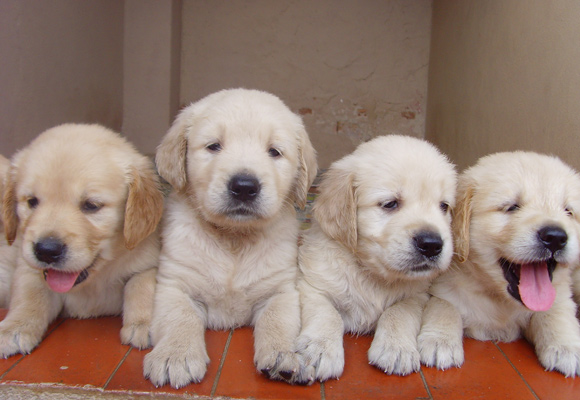
Pups in Paris Influenced by Planetary Alignments
No one who owns one doubts the family pooch exhibits personality traits that seem remarkably human at times. Is there a way to rationally explain this?
Incredibly, a new book describing the original and unusual research pursuits of award-winning French scientist Suzel Fuzeau-Braesch presents rigorous proof that humans and animals — specifically pedigreed pups and cloned cows — are behaviorally impacted by where the major planets turn up in their astrological birth charts.
Fuzeau-Braesch is an influential member of the prestigious Centre National de Recherche Scientifique in Paris and an Honorary Director of Research for the National Center for Scientific Research (CERN) in France. She earned a Docteur d’Etat es Sciences (D.Sc) from the University of Paris and, over a long and distinguished career, published best-selling books in France, authored 150 academic publications and earned various academic honors, including the prize known as the Gaveau de Kerville.
For 25 years she headed a research laboratory at University Paris XI – Orsay, where she researched animals’ lifestyles, pigmentations and brain behavior biochemistry. And, to the chagrin of various skeptic groups, their susceptibility to astrological influences as well.
Initially a skeptic herself, on a lark Fuzeau-Braesch decided to test the accuracy and reliability of an astrological report writing system she chanced upon in an Oxford Street shop in London in 1970. Computerized report-writing systems produce detailed personality profiles based on birth data alone.
The scientist recalls being surprised by how “accurately and uncannily” the astrological profiles described some close family members. The experience triggered a decades-long effort to determine “if astrological tools and concepts could be confirmed by hard science.”
After years of independent inquiry sandwiched between her regular teaching and research responsibilities, Fuzeau-Braesch founded Researches Astrologiques Methodes Scientifiques (RAMS) with colleagues in 1992 to collaborate on findings and publish an astrological research journal. Earlier this year her book for general audiences, Astrology Off The Beaten Track: A Scientific Study of Planets and Personality, was published posthumously in the United States by Anomalist Books.
In her ground-breaking account, the author examines motives and methods and describes studies successfully completed or in progress by members of the RAMS group, including two of the most novel experiments ever organized to test the astrological premise.
Fuzeau-Braesch makes the point that astrology was “constructed” over the course of more than two millennia with the imprint of a variety of cultures and mythological beliefs. So an objective, open-minded approach is essential when applying scientific methods to the ancient craft.
Checking out how the discipline might apply to the behavior of animals is scientifically valid “because animals will act naturally and not be influenced by culture or preconceived ideas,” she wrote.
Paris Dog Breeders Lend a Hand
This assumption was at the heart of a five-year study that sought to determine whether the behavior of 500 purebred puppies closely observed through their first eight weeks of life was astrologically indicated by the way planets were aligned in the sky at the exact moment of birth. The study, which was published in the Journal for Scientific Exploration, involved 12 Paris area dog breeders and 15 different breeds — everything from tiny Chihuahuas to much larger Labs and German Shepherds.
Over the course of the study, 100 litters with between two and eight pups each were investigated. For economic reasons (customers typically want as much information as they can get) breeders routinely keep more detailed records for puppies than are kept for most children, including exact birth times for each pup, detailed physical descriptions and anecdotal stories describing the way each pup behaves and interacts with litter mates.
Breeders generally agree that behavioral traits are well established by the time the puppies can legally be sold after eight weeks. For the Paris study, breeders provided information in ordinary, non-technical language and the researchers organized it using the Eysenck method of expressing behavior as either extroversion or neuroticism.
Personality types were categorized as Active, Dominant, Reserved, Affectionate, Nervous, and Staid (stable) with numerous descriptive sub-traits listed for each category. For example, under the Active category, the researchers included such traits as bold, rascally, daring, curious, and impudent. Dominant pups were aggressive, belligerent, strong willed, determined and boss of the litter, while pups in the reserved category were timorous, discrete, distant, solitary, shy and so on.
Because litter mates are usually born with the same Sun sign, projecting behavioral patterns based on simple Sun sign astrology wasn’t an option. Instead, Fuzeau-Braesch designed the study to test the traditional astrological notion that planets found near the “angles” of the birth chart (within 10 degrees) more powerfully influence character and personality.
In astrology, the “angles” of a birth chart are on the eastern horizon where the Sun rises and on the western horizon where it sets. The other major angles are formed overhead at the highest point in the sky map (the Midheaven) and at the lowest (the Nadir).
From any vantage point on Earth the sky map is continually changing due to the earth’s daily rotation on its axis. The Sun, Moon and planets independently arrive at each of the sensitive angles at some point during the day or night within a 24-hour period.
Fuzeau-Braesch thought testing the strength of planets at the angles using pedigreed pups was a credible approach because the staggered whelping of a puppy litter can extend over a period of several hours with as little as 15 minutes — and as much as two hours — between individual births. The sky map above and below the horizon is continually changing as the birthing process unfolds, setting up a different astrological dynamic for each individual pup.
In what she described as an “amazing” finding, the researcher discovered that dominant dogs — the leaders of every group — had the Sun and Jupiter in angular positions with a frequency that far exceeded the threshold of significance established for the test.
In human astrology, people born with these placements are generally described as charismatic, dominant, strong, sociable and influential. In the canine world, the pups with these placements were often first to eat and the entire group accepted this. Also, they would push the others away to get the attention of humans or just to move around. “This parallel is remarkable and cannot be due to chance,” she suggested.
Fuzeau-Braesch said the study also produced other positive though less impressive statistically significant results; for example, a reserved character with Saturn prominently positioned at one of the angles. But a larger sample would be needed to confirm these results statistically with greater confidence, she admitted.
The scientist also described a much smaller study involving 30 cloned cows that produced similar results. Despite having identical heredity, the cloned cows were born at different times and developed individual patterns of behavior that “correspond perfectly with classical astrological laws.”
So far, no other scientific explanation (other than astrology) has been proposed to explain this observed difference in behavior, she noted.
Astrology News Service admin
Category:
News Research Tags: astrological influence on animal behavior, astrology and animals, Astrology Off the Beaten Track, statisical evidence for astrology, Suzel Fuzeau-Braesch